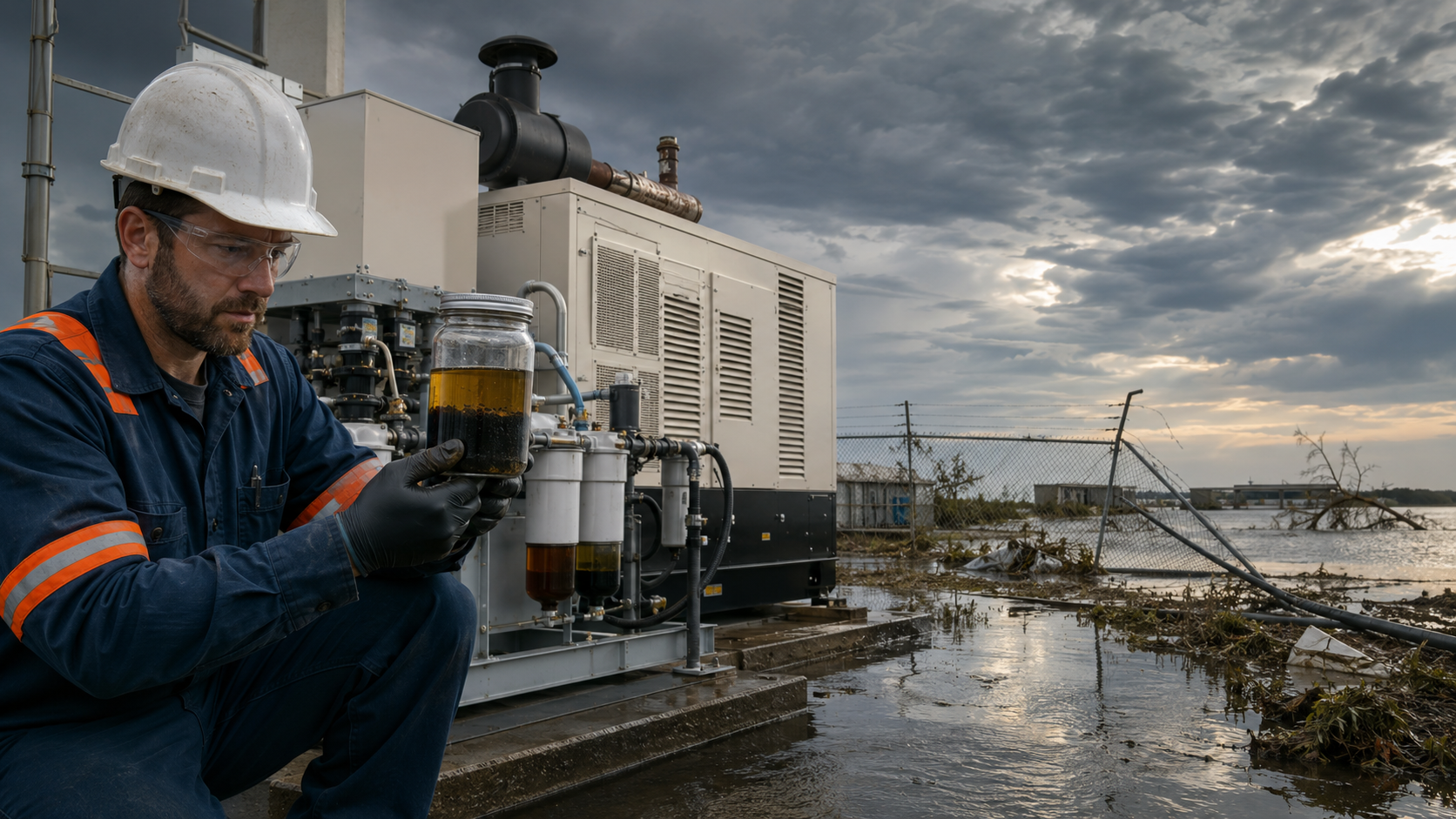
Why Generators Failed After Hurricane Ida — and How to Prevent It
The storm exposed a hard truth across the Gulf Coast: emergency generators are only as dependable as the fuel feeding them. Here is what failed, why it failed, and what facility owners can do before the next extended outage.
When Hurricane Ida moved through Louisiana in August 2021, backup generators became the last line of defense for hospitals, assisted-living facilities, industrial sites, marinas, and commercial buildings. In the days that followed, many generators did not fail because of a broken alternator or a dead battery. They failed because contaminated fuel reached the engine.
The lesson is straightforward: storm preparation cannot stop at filling the tank. Fuel must be clean, dry, tested, and supported by filters and equipment that have been proven under load.
The critical takeaway: A fuel gauge only tells you how much fuel is in a tank. It does not tell you whether that fuel will pass through a filter, reach an injector, or support an engine for several days.
Four Fuel-Side Failure Points
Ida turned small maintenance gaps into system-wide failures. These were the most common fuel problems seen after extended generator operation.
Water intrusion
Floodwater, wind-driven rain, and condensation entered tanks through loose caps, damaged vents, and compromised seals. Water settled at the bottom of the tank, where the generator fuel pickup could pull it into the engine.
Microbial contamination
Warm water and diesel created the ideal environment for bacteria and fungi. The resulting sludge clogged filters, fouled injectors, and reduced fuel flow exactly when generators were running hardest.
Plugged filters
Storm debris and years of accumulated sediment were pulled into primary filters during extended generator runs. Once the filter loaded up, fuel pressure dropped and the engine stalled or refused to start.
Untested fuel reserves
Many facilities had enough fuel on paper, but no recent sample or load test confirmed that the fuel was usable. A full tank is not the same as a reliable fuel supply.
Build a Fuel-Ready Generator Program
The best time to find a fuel problem is during a scheduled inspection — not during a power outage. Use these six steps to turn storm readiness into a repeatable maintenance program.
Sample fuel before storm season
Pull samples from the tank bottom and generator day tank at least once before June 1 and again during peak season. Look for haze, water separation, dark sediment, and a sour or unusual odor.
Polish fuel on a schedule
Fuel polishing removes free water, sediment, and microbial growth before they reach the engine. For standby generators, a monthly cycle during hurricane season is a practical baseline.
Test under real load
A no-load run confirms that an engine turns over; it does not prove that the system can carry the building. Complete a monthly load-bank test and record fuel pressure, exhaust, and runtime.
Replace filters before deployment
Install fresh primary filters before peak storm season and keep multiple spare sets on site. After flood exposure or a major storm, replace filters before the next extended run.
Protect tank openings
Inspect fill caps, gaskets, vents, access covers, and containment areas. Replace worn seals, clear vent obstructions, and make sure water cannot flow toward tank openings.
Document every check
Keep dated records of samples, polishing, treatments, filter changes, load tests, and water removal. During an emergency, clear records help the next technician act quickly and safely.
A Practical Pre-Storm Test
- 1Pull a bottom sample from the bulk tank and a sample from the generator day tank.
- 2Let the samples settle and check for free water, haze, sediment, color change, or layering.
- 3Run the generator under load long enough to verify stable fuel pressure and clean operation.
- 4Replace filters if pressure drops, the element is visibly dirty, or the service interval has passed.
- 5Record the results, fuel level, corrective actions, and the person responsible for the next check.
Do Not Wait for the Next Storm
Gulf Coast Fuel Polishing can sample, test, polish, and document your generator fuel systems before an emergency puts them to work.