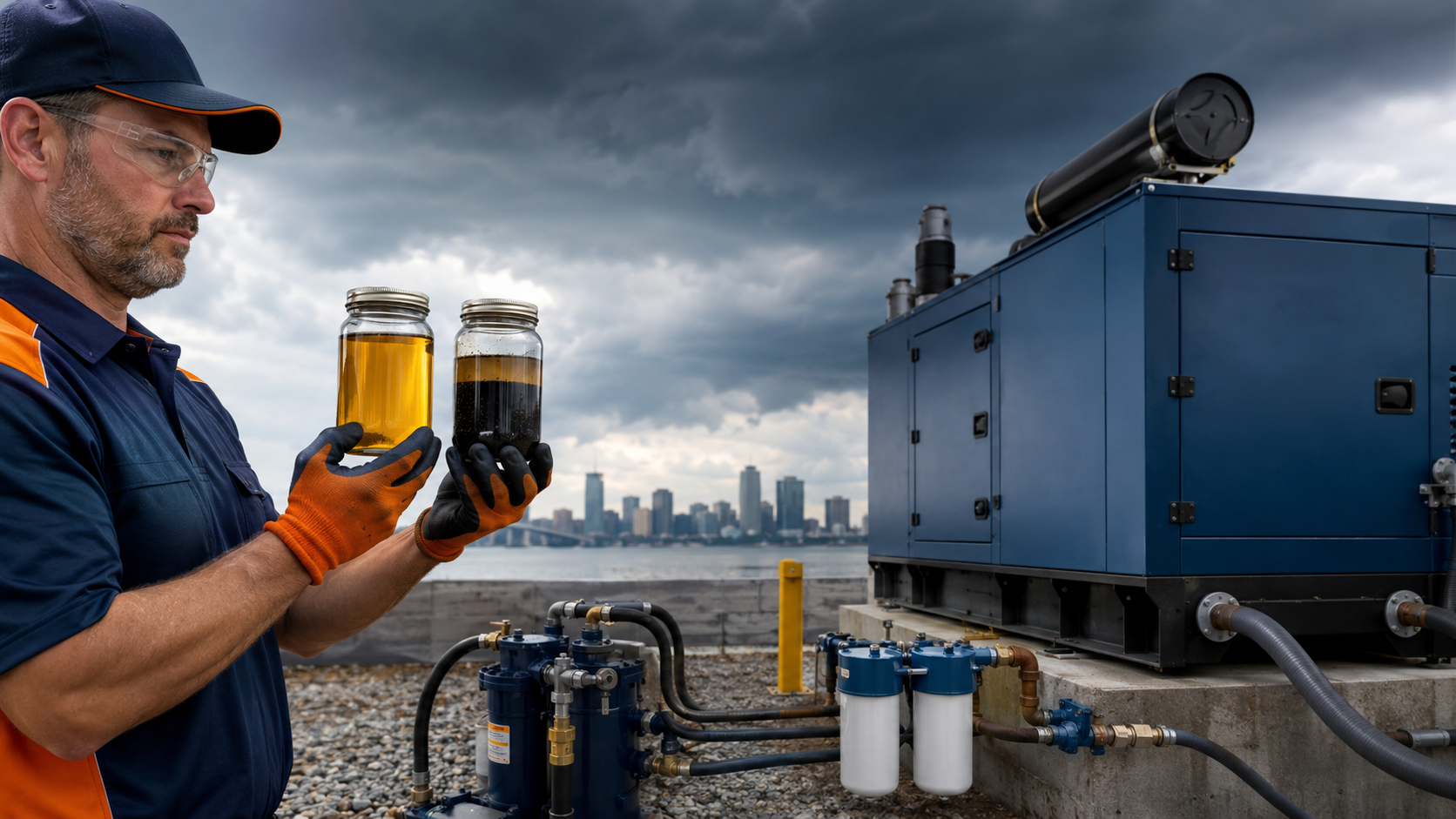
Hurricane Season Fuel Checklist: What to Do After June 1st
Hurricane season runs June 1 through November 30 — and the work doesn't stop once it starts. This is your month-by-month, storm-by-storm playbook for keeping fuel systems clean, compliant, and ready to run through the entire season.
Most facility managers breathe a sigh of relief once their pre-season prep is done. But the reality is that hurricane season is six months long, and fuel quality degrades faster during the hot, humid Gulf Coast summer than at any other time of year. The checklist below walks you through what to do after June 1st — from weekly monitoring tasks to storm response protocols — so your generators, vessels, and storage tanks stay ready through November 30th.
Why it matters: Post-storm analysis after Hurricanes Ida, Laura, and Michael showed that the majority of generator failures during extended outages were traced to fuel contamination — not mechanical breakdown. Clean fuel is the single highest-leverage thing you can control.
Weekly Fuel Monitoring
June 1 – November 30
- Pull a fuel sample from the lowest drain point of every storage tank and visually inspect for water, sediment, haze, or discoloration.
- Check tank gauge readings against physical dip measurements to catch slow leaks or calibration drift.
- Inspect tank vents and overflow containment for blockages from debris, insect nests, or storm-driven debris.
- Log every inspection with date, technician initials, sample appearance, and any corrective action taken.
- Monitor fuel temperature — diesel stored above 85°F degrades faster and encourages microbial growth.
Water Removal & Moisture Control
Weekly during active season
- Drain any accumulated water from tank bottoms immediately — even a quarter inch of water is enough to spawn microbial colonies.
- Check desiccant breathers on tank vents and replace them if the indicating silica gel has turned from blue to pink.
- Inspect fill caps, gaskets, and manway covers for weather-tight seals; replace any cracked or hardened gaskets.
- Verify that tank sumps and interstitial monitoring sensors are dry and functioning.
- After every named storm in your area, perform an emergency water check within 48 hours.
Fuel Polishing & Stabilization
Monthly, or after any major storm
- Schedule a fuel polishing cycle every 30 days for standby generators and infrequently used tanks to prevent stratification.
- Add a fresh dose of fuel stabilizer and biocide at the start of the season, and re-dose every 90 days per manufacturer instructions.
- Run a fuel quality test (ASTM D975 panel) at least once mid-season — July or August — to catch problems before peak storm months.
- If a named storm is forecast within 5 days, schedule an emergency polishing pass to ensure your fuel is clean before you need it.
- Keep at least 5–10 gallons of biocide on hand so you can treat immediately after a contamination event.
Generator Load Testing
Monthly
- Perform a no-load generator run weekly for 30 minutes to circulate fuel and keep the engine lubricated.
- Conduct a full load-bank test monthly — at least 30 minutes at 30% load minimum — to verify the engine can carry real demand.
- During the load test, watch for exhaust smoke color, unusual vibrations, and fuel pressure readings.
- After each test, pull a fuel sample from the generator day tank and inspect for water or particulates.
- Document every test with a timestamped log entry; NFPA 110 requires monthly operational records.
Fuel Supply & Resupply Planning
Before peak season (August) and after any storm
- Confirm your emergency fuel delivery contract is active and review the guaranteed response time — 24 hours is the minimum; 12 is better.
- Identify at least two backup fuel suppliers in case your primary vendor is also affected by a storm.
- Pre-position fuel: top off every storage tank to at least 90% capacity before a named storm enters the Gulf.
- Keep a written list of fuel delivery drivers and their contact information, plus gate access codes for after-hours delivery.
- Verify that your fuel supplier can deliver during a declared emergency — some carriers are restricted by state emergency orders.
Filter & Separator Maintenance
Monthly, or after any fuel polishing cycle
- Replace primary fuel filters every 90 days during hurricane season, or sooner if differential pressure exceeds the manufacturer limit.
- Inspect water separator elements and drain the water collection bowl weekly during active storm periods.
- Keep a minimum spare-parts kit on site: two sets of primary filters, two sets of secondary filters, and replacement gaskets.
- Check all fuel lines for chafing, cracking, or loose fittings — vibration from extended generator runs can loosen connections.
- After any storm event, replace all filters before the next generator run to prevent clogged-filter failures.
Compliance Documentation
Ongoing
- Maintain a fuel testing log with dated lab results — NFPA 110, EPA UST, and state DEQ inspectors will ask for it.
- Keep records of every polishing cycle, biocide treatment, and water removal event with the technician name and date.
- Verify that your Spill Prevention, Control, and Countermeasure (SPCC) plan is current and reviewed within the last year.
- Ensure all emergency response contact lists are updated with current phone numbers for fuel suppliers, fire department, and environmental responders.
- Take photos of tank conditions, sample jars, and filter elements before and after service — visual records are powerful documentation.
Storm Response Protocol
Activated when a named storm enters the Gulf
- T+5 days: Top off all fuel tanks, confirm delivery contracts, and brief all staff on emergency roles.
- T+3 days: Run a full load test on every generator and document fuel levels at each tank.
- T+2 days: Polish fuel in all standby tanks and add biocide if not done in the last 30 days.
- T+1 day: Secure loose equipment, verify generator fuel supply lines are clear, and confirm 24/7 monitoring coverage.
- During the storm: Run generators only as needed to conserve fuel; log every start and stop.
- After the storm: Within 48 hours, sample all tanks for water intrusion, replace all filters, and document any damage with photos.
Season Calendar
Baseline testing & stabilization
Mid-season fuel quality test (ASTM D975)
Peak prep — top off tanks, confirm contracts
Peak storm activity — weekly water checks
Post-peak polishing & filter replacement
Season-end audit & documentation review
Need Help Executing This Checklist?
Gulf Coast Fuel Polishing offers scheduled maintenance contracts that cover every item on this list — from weekly sampling to storm-response fuel polishing. We handle the fuel so you can focus on keeping the lights on.
Keep Reading
These related articles go deeper on the topics covered in this checklist.